Development of the PlayStation's first successor started not long after the release of the original. Rumors about it started
spreading in early 1997, saying it would have a built-in DVD player, backwards compatibility with the PS1, and Internet connectivity.
But for some reason, Sony denied these assumptions. It wasn't until March 2, 1999 that the PS2 was formally announced. It was meant
to compete with Sega's Dreamcast, despite Nintendo's Gamecube and Microsoft's [original] Xbox being cited as the real rivals. On
September 20, the console was shown off at the Tokyo Game Show, where a demo of Gran Turismo 2000 (which became Gran Turismo 3:
A-Spec) was offered to showcase the graphical capabilities of the system.
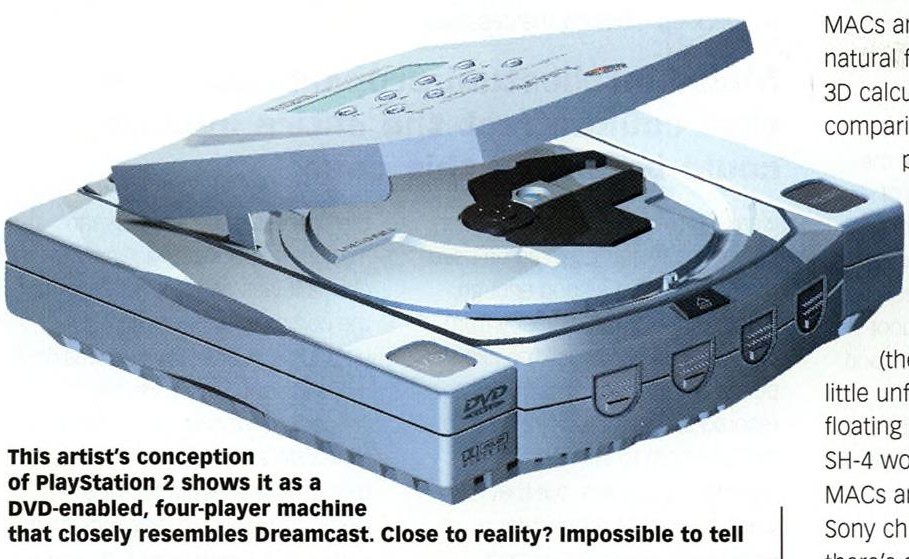
At first, the PlayStation 2 had a striking resemblance to Sega's Dreamcast, from the general shape to the four
controller ports to the disc cover that opens upwards. There were a bunch of buttons and a display on the disc cover.
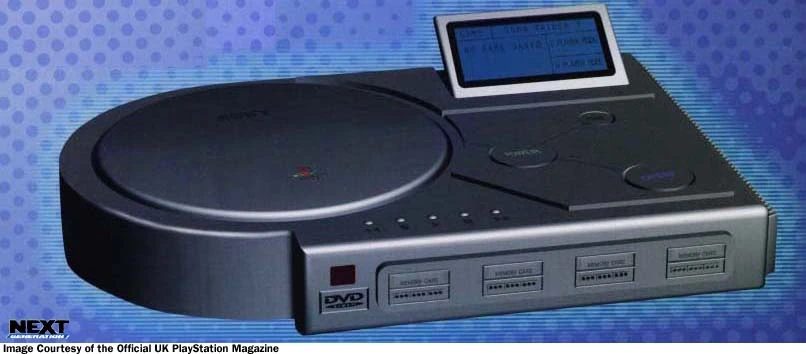
The second prototype inherited the shape of the PlayStation and has a power, reset, and eject button that resembles
those on its predecessor. What's mysterious is the LCD display towards the back. It could have been for changing settings and/or
picking songs.
In March 2000, the PS2 was released, and sales figures were unlike anything amassed by a video game product. Put this into
perspective: Just 11 days before the PS2's demo at the Tokyo Game Show, the Dreamcast was released in the US, making $97,000,000. The
PS2 came out and raking in almost triple that on ITS first day, in excess of $250,000,000! It sold so well due to its
backwards-compatibility with original PlayStation games and being a low-cost HOME THEATER system that had the CD playback the PS1
had. But to top it off, it even had DVD playback! By the end of 2000, the success of the PS2 destroyed all credibility Sega had in
console production, so they quietly discontinued their Dreamcast the next March and any console production henceforth. So, the
PlayStation 2 pretty much monopolized the 6th generation of gaming until the release of the Nintendo Gamecube in September and the
Microsoft Xbox in November. In May 2002, Sony cut the console's price down to $199, matching the GameCube's price and making it
cheaper than the Xbox.

Over two years later in September 2004, the thinner and more compact PS2 Slim came out. The disc tray opened upwards like the PS1,
rather than like a DVD player. Sony ended production of the earlier model to allow distributors to empty stock and make room for the
new model. As they were doing so, demand was understated and a delay in production occurred mainly due to shortages. It was made
worse when a Soviet oil tanker was stranded in the Suez Canal and blocked a new shipment of PS2s meant for the UK.
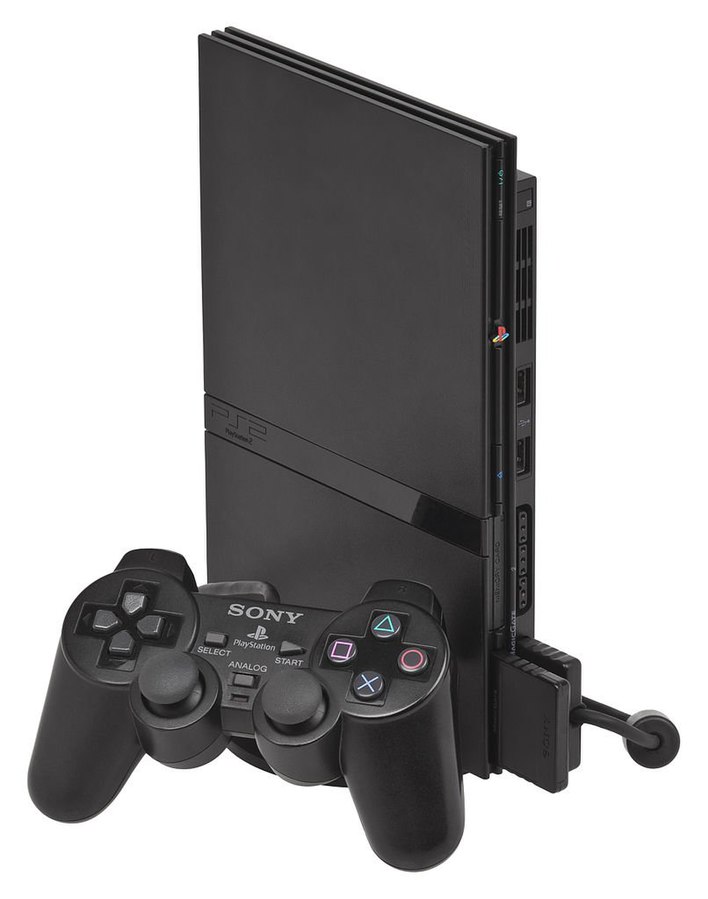
In 2006, in anticipation of the PS3's release, Sony cut the PS2's price down once more to $159. The PS2 was in production through the
release of two of its own successors before it was discontinued on January 4, 2013, after 12 years and 10 months on the market.
Although not as long as the Atari 2600 (which lasted 13 years and 3 months), the PS2 lasted a very good while. In total, it sold
almost
160 million units worldwide, making it the best selling video game console of all time!