Gray Clouds Roll In
Development on the ZX Spectrum began six months following the ZX81's release. Some design cues used by the ZX80 and ZX81 were
recycled with the new machine in order for its manufacture to be quicker and cheaper, rather than spend extra money and time on
totally new designs. In fact, it was supposed to be nearly identical to the predecessors except for the addition of chips for
more memory, a crystal oscillator, and most of all, colour. As such, early in production, the computer was referred to as the
ZX81 Colour, but more on that in a bit.
The hardware was designed by chief engineer Richard Altwasser. He consolidated the most important hardware functions into the
lone ULA chip, designed a graphics mode within 7 KB, and convinced Sinclair's other engineers to reprogram the CPU to completely
ignore the main display so it could work as efficiently as it can. This also served to make the computer's hallmark features
possible, such as hi-res graphics, 16 KB of memory (9 KB for the user to write programs), and a good colour palette.
Lightning Illuminates Momentarily
In the standard graphics mode, the ZX Spectrum has a native resolution of 256-by-192 pixels, divided into a grid of 32-by-24
character cells. Colour output is a 64th of the pixel resolution and works independently, with each character cell lying in one
of 64 pixel regions in an 8-by-8 array called attribute blocks. That means each can display no more than two colours from a
palette of seven at two brightnesses and black.
Thanks to the aforementioned strategic coding done by Richard Altwasser, the graphical capabilities were consolidated into 7 KB
of RAM. 6,144 bytes were taken by the pixel bitmap and 768 bytes were taken up by the 8-by-8 array of attribute blocks that
stores the colour information.
Thunder Rumbles
Unlike the Spectrum's predecessors, it is capable of producing sound, but it's one voice at ten octaves. The basic nature of the
sound capabilities actually inspired ZX Spectrum owners to figure out ways to get extra voices. Software would eventually come
out that allowed for two voice sound, requiring a cassette recorder.
The Wind Blows
Steve Vickers was mostly responsible for the Spectrum's operating system and Sinclair BASIC interpreter. He also helped in
limiting the amount of ROM the interpreter took up, leaving as much memory for the user's BASIC programs. Steve added some
commands to BASIC such as floating-point arithmetic, trigonometric, and exponential maths functions.
The Rain Falls
After having designed the case and logo for the ZX81, Rick Dickinson was responsible for the ZX Spectrum's case and logo too. He
had to design a more "marketable" appearance for the computer itself, and more importantly, the massive task of fitting 192
BASIC commands on a keyboard of 40 keys.
I think now's a good time to mention that there's loads of pictures online of scratchpads from back in the day with concept
sketches of the logo under the ZX81 Colour name, early case designs, keyboard layouts, and much more. In fact, there's so many
that I'm only putting a few of those that I find most important on this page. Plus, most of the sketches are accompanied by a
date.
Here's a link to Flickr to see the
images that were posted by the ZX81 designer himself, Rick Dickinson (RIP)!
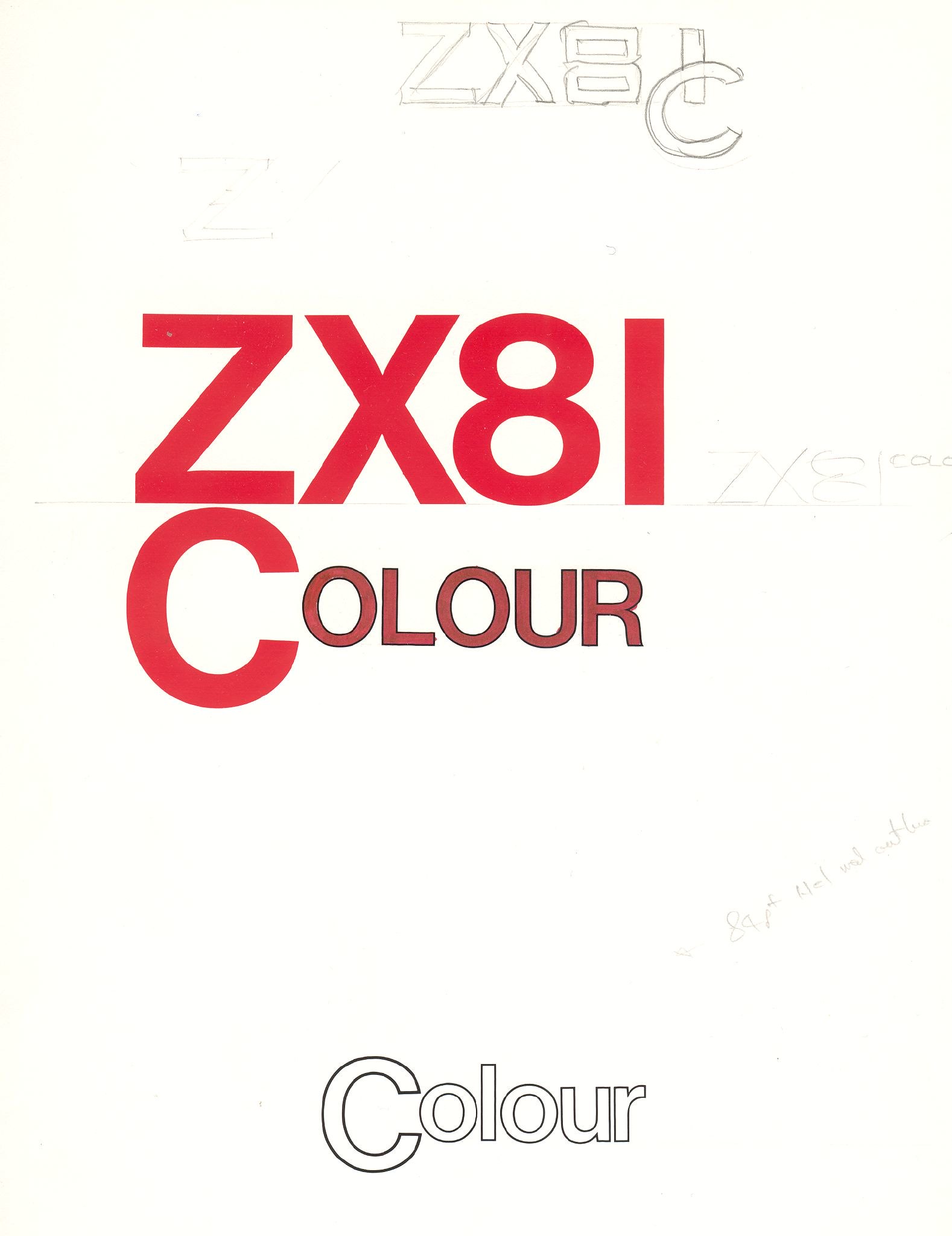
The name was originally ZX81 Colour, as mentioned before. I feel that this was one of the first sketches they made for the new
computer's logo, because here, they decided to just recycle the previous machine's logo and work off of that. And as there's no
indicated date on this sketch, I presume it's from days before the next one.
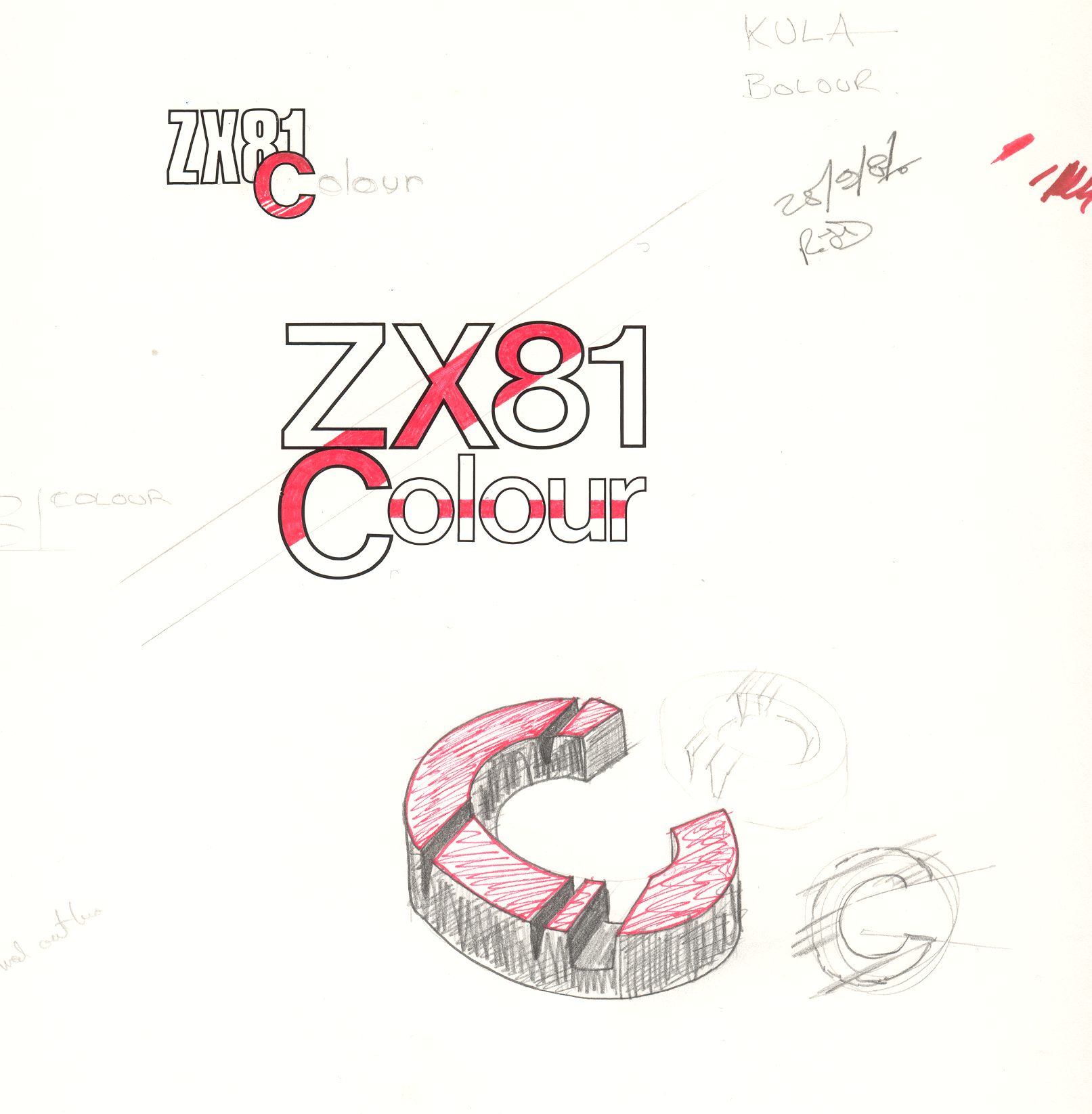
Dated 25 (?) September 1981, it went through a bunch of other changes, such as the font and the dash of red. The size of the
logo seems to indicate it was a very prominent idea at that moment. "Colour" was in all caps in one concept, and the lowercase
one at the bottom was actually used on a prototype. There was also a big 3D "C".
The Storm Rolls Away
As the computer was nearing completion, Sinclair felt that a better name than ZX81 Colour was in order. As they experimented
with case styles and keyboard layouts, they would devise some prototype machines, introducing the codename "ZX82" (notice a
pattern with these computer names?).

You can see on this first ZX82 prototype that it has dark blue keys and a near-final case. The majority of the keywords that are
entered by the "shift" and "ext" keys are in white or red. In the case of this prototype, white commands are above and red ones
are below the keys.
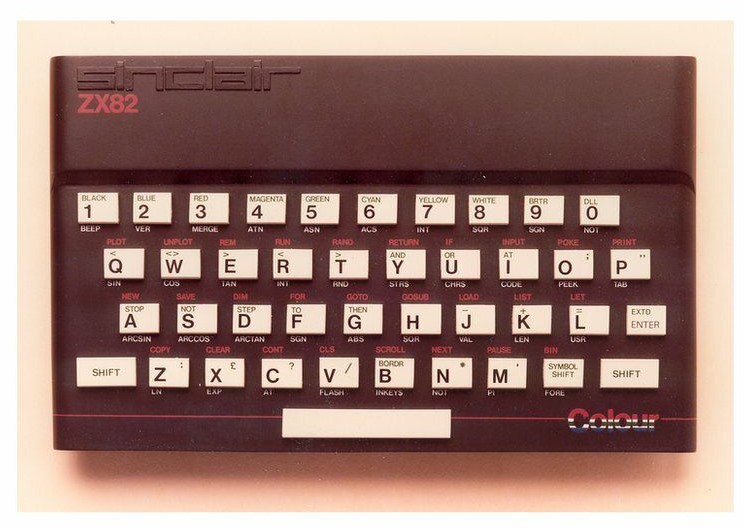
The Sinclair logo was added at the top-left and made the keys were made white. The color commands that were above the number
keys are now on them. In general, most commands were moved from key to key. The colors of the commands situated above and below
the keys were switched from the last prototype. The main character on each key was made larger. Undoubtedly the most interesting
thing about this prototype alone is the bottom was made longer to fit a more proper "spacebar", thus making room for the
"Colour" wordmark from the concept sketches, albeit with dashes of colors that the sketches didn't have. Going by that, I wonder
if this was the first ZX82 prototype made after changing to this codename before the next prototype.
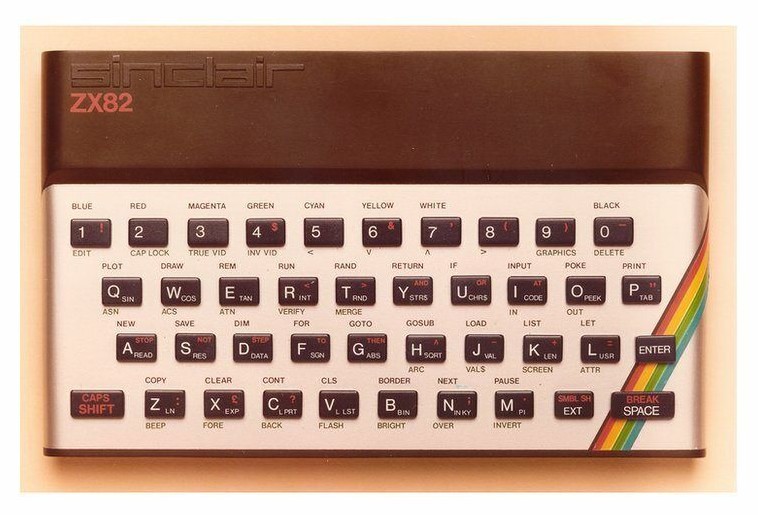
The third major prototype ZX82 is kind of interesting as it's now silver around the keys. And although this was also called the
ZX82, it features the Spectrum's signature rainbow "flash" on the corner. The final product would ultimately remove the silver.
The Sun and Rainbow Come Out
After all was said and done, the ZX Spectrum were released on 23 April 1982. It came out as a 16 KB model sold for £125, which
was competitive with BBC Micro, and a 48 KB model for £175. Sinclair decided to sell units through the post because there were
barely any retailers that sold computers in the UK, and so that they were consistently receiving money selling them before
they're ready for postage. This was criticised as some Spectrums wouldn't arrive at the homes of those who purchased them.
The rubber keyboard was a heavily contentious point of the Spectrum, as Clive Sinclair promised a full-sized proper keyboard.
But he decided the size that the machine would become was against the philosophy of his company, and it would be expensive, so
he went with the rubber keyboard.
A glitch was found in the original batch of Spectrums' ULA chip, requiring a second revision of the board that fixes it. But
despite these shortcomings, the ZX Spectrum was still very popular, selling 500,000 units in the first year. Like some other
highly influential computers back then, it has a highly dedicated following of hobbyists that still enjoy using them.

Crossing the Pond
Following Timex's release of the ZX81 as the Timex Sinclair 1000 and its upgraded sibling the 1500, they began a new series of
Americanised ZX Spectrums. Timex was going to make small alterations to the Spectrum for the US, but when it came to the Federal
Communications Commission, a brand new chip had to be designed, causing a delay in which Timex took the opportunity to add new
features. Two such features were a cartridge port so the new computer could be more of a game console and the AY-3-8912 sound
chip, found in the Intellivision game system, for more sophisticated sound.

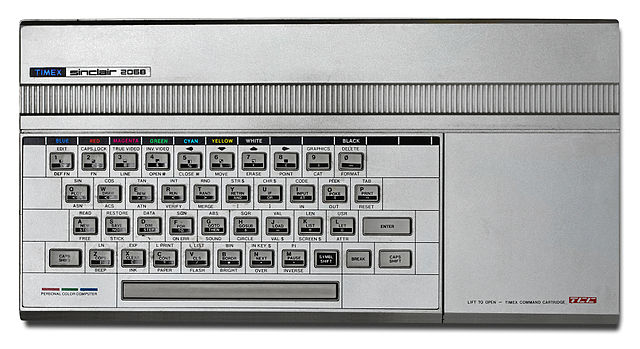
On October 26, 1983, Timex introduced the Timex Sinclair 2000 at the Boston Computer Society. You can see it was originally
designed after the TS 1500, and has some colored shapes at the corner to indicate it's in colour, unlike its predecessors. Timex
planned on releasing models of the TS 2000 with different amounts of memory, including a 2068.
They ended up just releasing a computer called the Timex Sinclair 2068 in November. Unfortunately for Timex, there was a lot of
competition in the American home computer market at that time. They were competing with the best of the best in the form of the
Commodore 64, Atari 8-bit line, and Tandy Color Computer 2. Instead of doing really well, it suffered the same fate as the
TI-99/4A, Mattel Aquarius, and Coleco Adam, in that most users passed on them due to the specs not being worth the price. After
six months on the market in May 1984, the Timex Sinclair 2068 was discontinued, and so was the whole line of machines in the US.