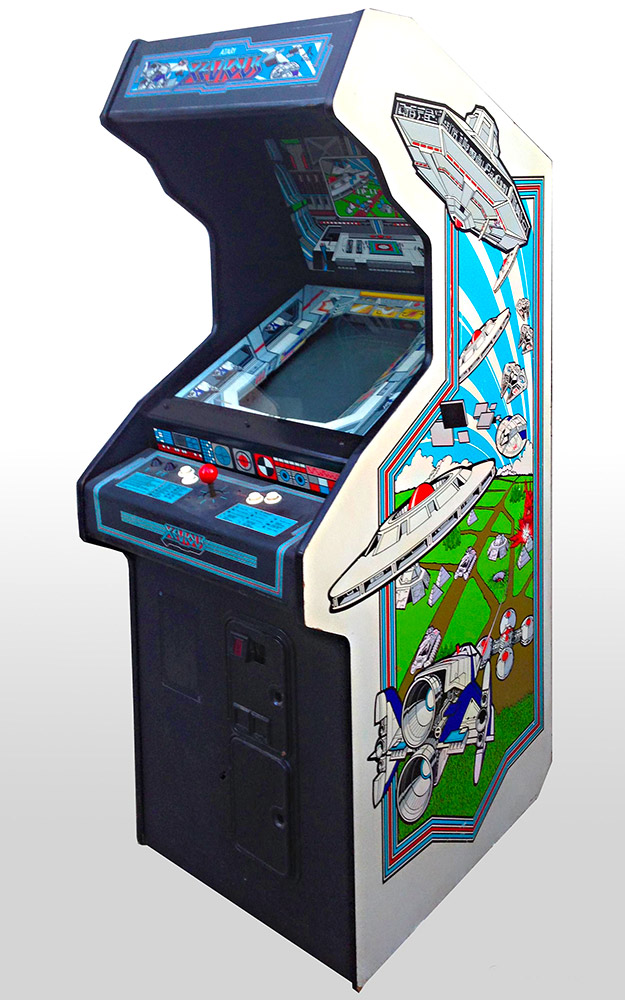
Dangerously Devious
When Namco designer Masanobu Endou joined the company, Konami had released the industry's first side-scrolling shoot-em-up Scramble.
This was when Namco's marketing department instructed the designers to create a shoot-em-up that uses two "fire" buttons, in addition
to the joystick. The goal at this point was to make a mildly-challenging game that more casual players will be able to enjoy. Endou
was keen on this task, having already spent a month practicing programming. He envisioned having the enemies fly onscreen and away if
the player didn't kill it, rather than having them assemble a formation like past space shooters.
1942, Before 1942, After 1942
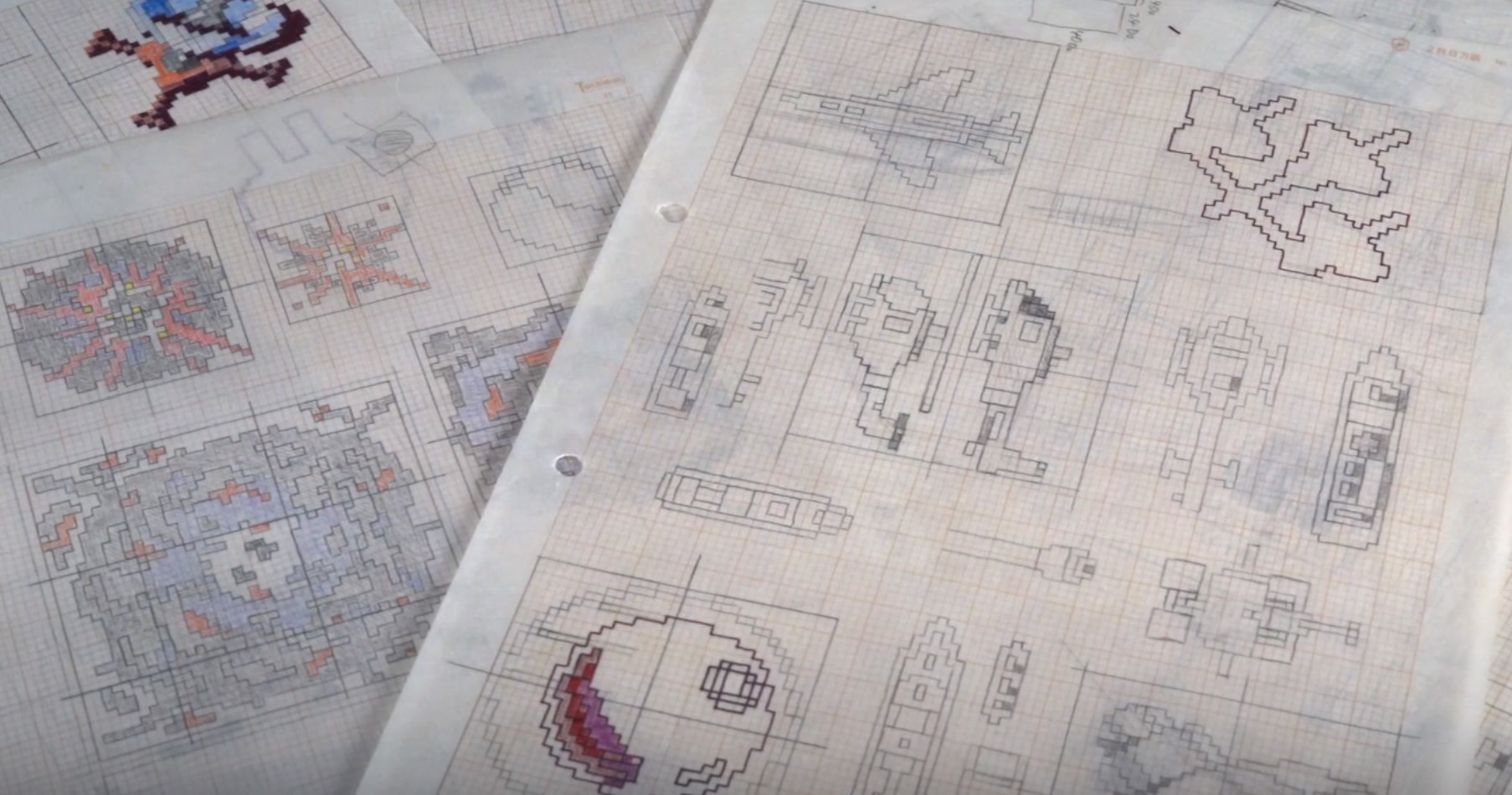
This new top-down shooter began development under the name Cheyenne. It was Vietnam War themed, where the player controls a
helicopter from the war named the Cheyenne. There's even a sprite sheet from back in this phase of development that features early
versions of sprites, including what I believe is either an early player or enemy sprite:

Mi-Sci-Fi
But then, Endou stepped in with his love for science fiction. Citing the simplicity of games like Pac-Man and having little story, he
envisioned this game with these stipulations: The game was to have a consistent world and setting, high-quality sprites, a story that
could "stand on its own merits", and invoke mystery and immersion like anime and movies, despite the disagreement from Namco's
management. The consistent world and setting consisted of 16 similar-yet-different levels with a South American-esque design with
ample forests, rivers, and plains for the player to trek over, with each level separated by more forests. Next, the high-quality
sprites were designed with a monochrome, silvery look as an early means of what's called raytracing, where colors are used to create
depth by simulating light and shadows coming off of them. The story was about the human race's fight against the ancient civilization
that has returned to attempt to claim control over Earth. At a couple points in the game, a big bird "drawn" in the ground Peruvian
Nazca-line-style appeared as the player flew by. This also served to invoke mystery, as in real life, no one ever really knew what
they meant or what they were for.
"Secret" Service
What makes this game stand out so much against other scrolling shooters of the era was the abundance of secrets littered throughout
the game. How this came about was as Endou was creating a crosshair for the player to use to drop bombs on the ground, he could use
three colors in such a way to make the crosshair flash. So then, he coded it to appear like it's flashing when hovered over a secret,
imploring the player to drop a bomb to reveal it. Endou then wondered, what if we did this for
invisible things on the ground?
That's what inspired the "Sol" citadels, which are worth 2,000 points when revealed and destroyed. In addition, special flags from
Namco's earlier Rally-X title also appeared as secrets. You can reveal them in the same way for 1,000 points, and pick them up for an
extra life! Namco was apparently furious about these hidden objects, but Endou was able to explain away that they were "bugs" and
left them in the game. Of course, these secrets undeniably increased the replay value and thus profits the game received.
Andor's Genesis
The game was released in early 1983, and was a smash hit. 5,295 cabinets were sold in 1983 alone (don't know the total amount that
were sold), and it received ports on the Famicom/NES, Commodore 64, Apple II, and was a launch title for Atari's own 7800.